

It's Not What You Sell For — It's What You Buy For
When people decide to move home, there is often one number that consumes all of their attention: the sale price of their current property.
It's understandable. After all, selling your home is a significant event, and everyone wants to achieve the highest possible price. Conversations with neighbours, headlines in the media, and stories from friends often focus on one thing: "What did it sell for?"
But in reality, when you're both selling and buying, the sale price is only half of the equation.
The number that truly matters is the difference between what you sell for and what you buy for.
Looking at the Bigger Picture
Imagine two scenarios.
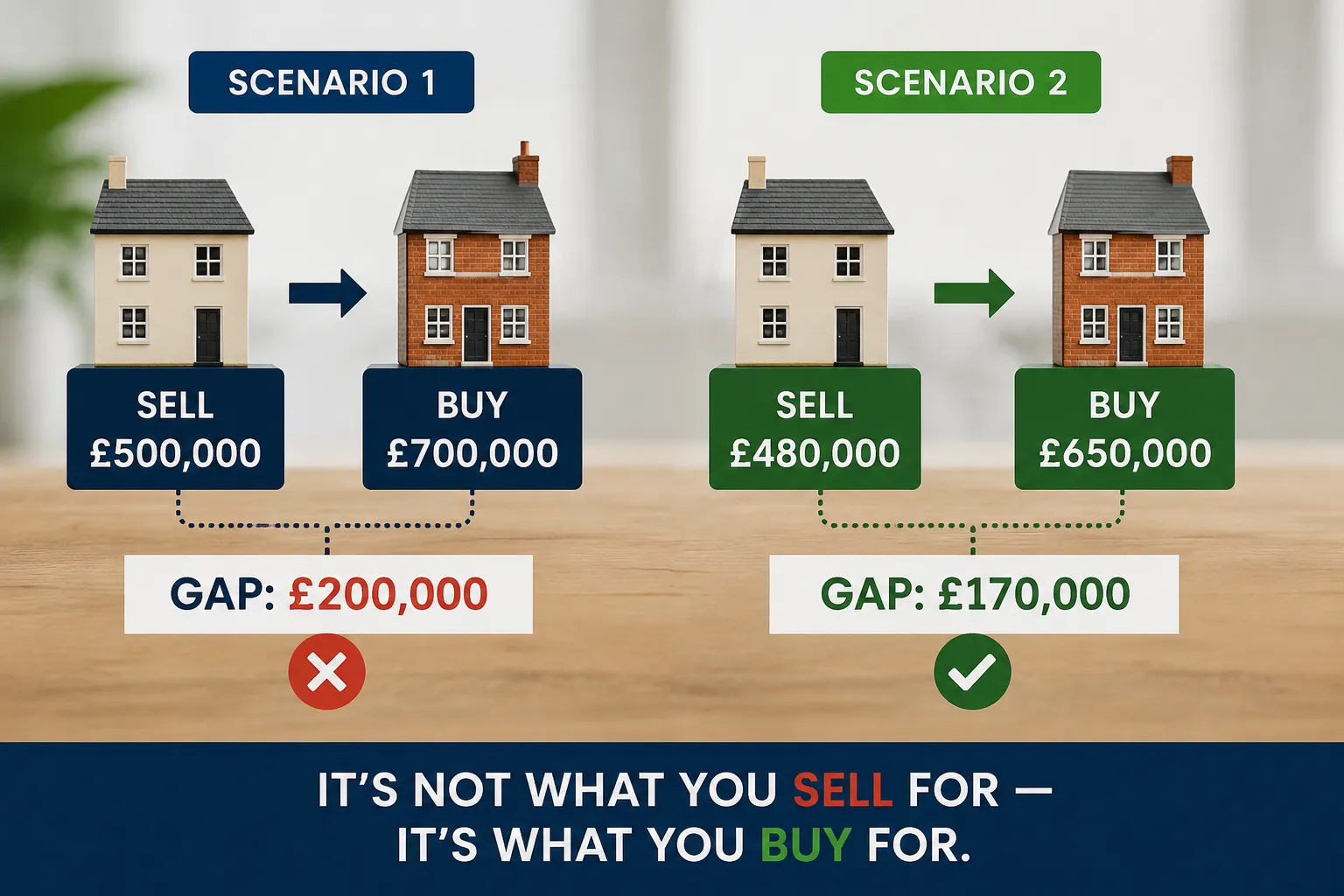
In the first, you sell your home for £500,000 and buy your next home for £700,000.
In the second, you sell your home for £480,000 and buy your next home for £650,000.
Many people would initially feel happier with the first scenario because they achieved a higher sale price. However, the real cost of moving is very different.
In the first example, the gap is £200,000.
In the second example, the gap is £170,000.
Even though the sale price was lower, the overall move was actually more affordable.
This is where many movers lose sight of what really matters.
Don't Let Pride Cost You Money
Sometimes sellers become fixated on squeezing every last pound out of their current property. They reject reasonable offers, hold out for more, and focus entirely on "winning" the sale.
Meanwhile, they may be purchasing in a market where prices are rising quickly, or they miss opportunities to negotiate strongly on the home they want to buy.
A £10,000 gain on your sale means very little if you end up paying £25,000 more for your next home.
The objective isn't to achieve the highest sale price in isolation. The objective is to make the move that best suits your lifestyle, your finances, and your future plans.
The Figure in the Middle
The most important number is the figure in the middle—the amount you need to bridge between selling one property and buying the next.
This is the number that affects:
- Your mortgage borrowing
- Your monthly repayments
- Your financial flexibility
- Your stress levels
- Your long-term affordability
A successful move is not measured by the headline sale price. It's measured by whether the overall transaction puts you in a stronger position.
Think Like a Mover, Not Just a Seller
The mistake many homeowners make is viewing themselves solely as sellers.
In reality, most are movers.
That means every decision should be viewed through both lenses:
- What am I selling for?
- What am I buying for?
- What is the net cost of my move?
When you focus on all three questions, you gain a much clearer picture of whether you're making a smart financial decision.
The Real Goal
The goal isn't to boast about the price you achieved for your old home.
The goal is to secure the right home for the next chapter of your life at a figure that is comfortable and sustainable.
Years from now, you won't be thinking about whether you achieved an extra few thousand pounds on your sale. You'll be thinking about whether you're happy in your new home and whether the move made financial sense.
So when you're planning your next move, remember this:
It's not what you sell for that matters most.
It's what you buy for—and whether the gap between the two is affordable.



Share this with
Email
Facebook
Messenger
X
Pinterest
LinkedIn
Copy this link