


I’ve Received an Offer Lower Offer Than I Expected….. What Now?
You’ve put your house on the market, had the viewings, waited for the phone to ring, and finally, an offer lands.
You open the email.
£475,000.
You were expecting something closer to £500,000.
First reaction?
“Absolutely not.”
Fair enough. But before you reject it, take a breath.
A lower-than-expected offer doesn’t necessarily mean your house is worth less than you thought. It also doesn’t mean you should accept it.
It means you now have something to work with.
And in the current market, that matters.
Buyers have a huge amount of choice. They can compare properties, sold prices, asking prices, price reductions, time on the market and mortgage costs before they even make an offer.
Rightmove's latest data shows the number of homes available for sale is at a 12-year high for this time of year, while buyer enquiries are 9% lower than a year ago. Mortgage rates also remain a significant factor in affordability.
With the Budget coming up and uncertainty around where mortgage rates go next, buyers have even more reason to be cautious.
So, when a buyer offers £475,000 for a house you believe is worth £500,000, it can feel like they're undervaluing your home.
But they're looking at it differently.
They're comparing your house with everything else they could buy.
You've lived there. You've made memories there. You've spent money improving it. The buyer hasn't — and they don't need to.
Don't take the offer personally.
Look at the whole offer
The headline figure matters, but it isn't the only thing that matters.
Ask:
Is the buyer chain free?
Have they sold their property?
Are they a first-time buyer?
Do they have a mortgage agreed?
How quickly can they proceed?
Are they flexible on the moving date?
Are there any conditions attached?
A £475,000 offer from a first-time buyer with a mortgage agreed and no chain could potentially be more attractive than £490,000 from someone who still needs to sell their own property.
Price matters. Certainty matters too.
Understand what the market is telling you.
Look at what similar properties are actually selling for, not just what they're advertised for.
If three similar houses have recently sold for £475,000–£485,000 and you're asking £525,000, the lower offer might be telling you something useful.
If comparable properties are achieving £500,000+, you may have good reason to push back.
The important thing is to negotiate from evidence rather than emotion.
And remember, buyers have access to much more information than they used to. They can see sold prices, compare competing properties and track how long homes have been on the market.
They're coming to the negotiation informed.
Don't automatically reject it.
This is one of the easiest mistakes to make.
If you reject £475,000 with a blunt "no," you may simply lose the opportunity to find out whether there was another £10,000, £15,000 or £20,000 available.
Instead, counter.
Perhaps your position is £500,000.
Perhaps you'd genuinely accept £490,000.
Whatever the number is, know your position before you start negotiating.
Because here's something worth remembering:
With no offers, you have no one to negotiate with.
An offer gives you a conversation. A conversation gives you information. And information gives you something to negotiate with.
You don't control the figure when you sell.
This is one of the hardest things for sellers to accept.
You can choose your asking price, how you present the property and whether you accept an offer.
But ultimately, you don't control what someone is prepared to pay.
The buyer does.
The market does.
You can influence the price, but you can't dictate it.
And that's particularly important when buyers currently have so much choice.
But when you buy, you get some control back
This is the bit sellers often forget.
You might not achieve the £500,000 you hoped for.
But when you become a buyer, you can negotiate.
You can compare properties.
You can make offers.
You can walk away.
You might be thinking:
“I need £500,000 for my house.”
But what you might actually mean is:
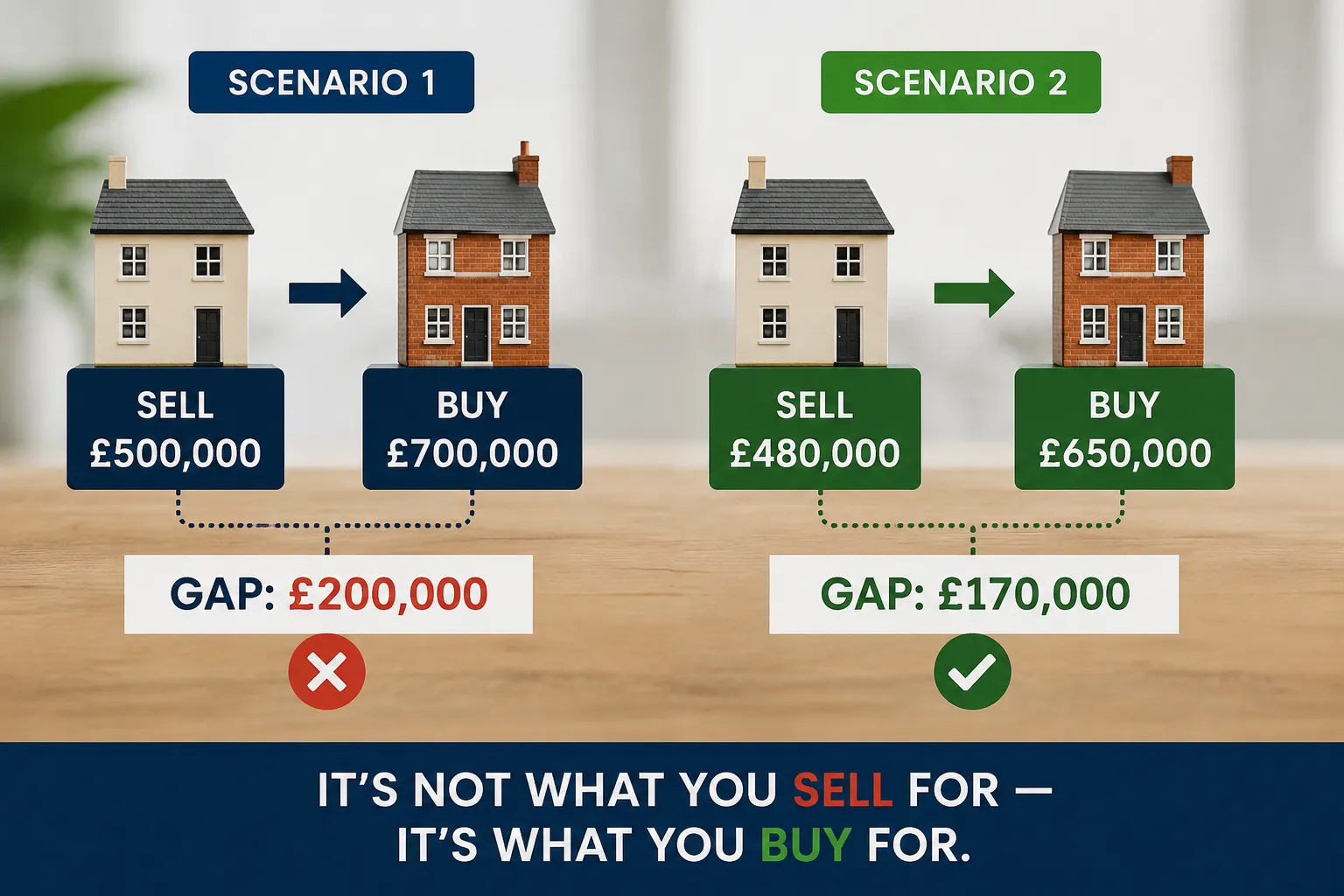
“I need £500,000 because that's what makes the house I'm buying affordable.”
Those are two very different things.
If you sell for £10,000 less than expected but negotiate £15,000 off the property you're buying, your overall position may actually be better than you thought.
That's why you need to look at the whole move, not just the price you're achieving on your own house.
So, what should you do?
Don't panic.
Don't take the offer personally.
Don't reject it automatically.
And don't accept it just because you're relieved someone has finally offered.
Look at the buyer, the market, the evidence, your circumstances and your onward purchase.
Ask your agent for their opinions and intel (they will have date that you don’t).
Most importantly, understand where you have control — and where you don't.
You don't control the price someone offers for your house.
But when you become the buyer, you regain some of that negotiating power.
And sometimes the difference between a disappointing offer and a successful move is simply knowing what to do next.
The Sold.Buy.Simon approach
Laura and I aren't interested in dressing up an offer to make it sound better than it is.
We'll tell you what we think, explain where the offer sits against the market, and help you work out what makes sense for your circumstances.
No pressure. No corporate waffle. No pretending every offer is "amazing."
Just a straightforward conversation about the numbers — and how we get you from offer accepted to completion


Share this with
Email
Facebook
Messenger
X
Pinterest
LinkedIn
Copy this link